
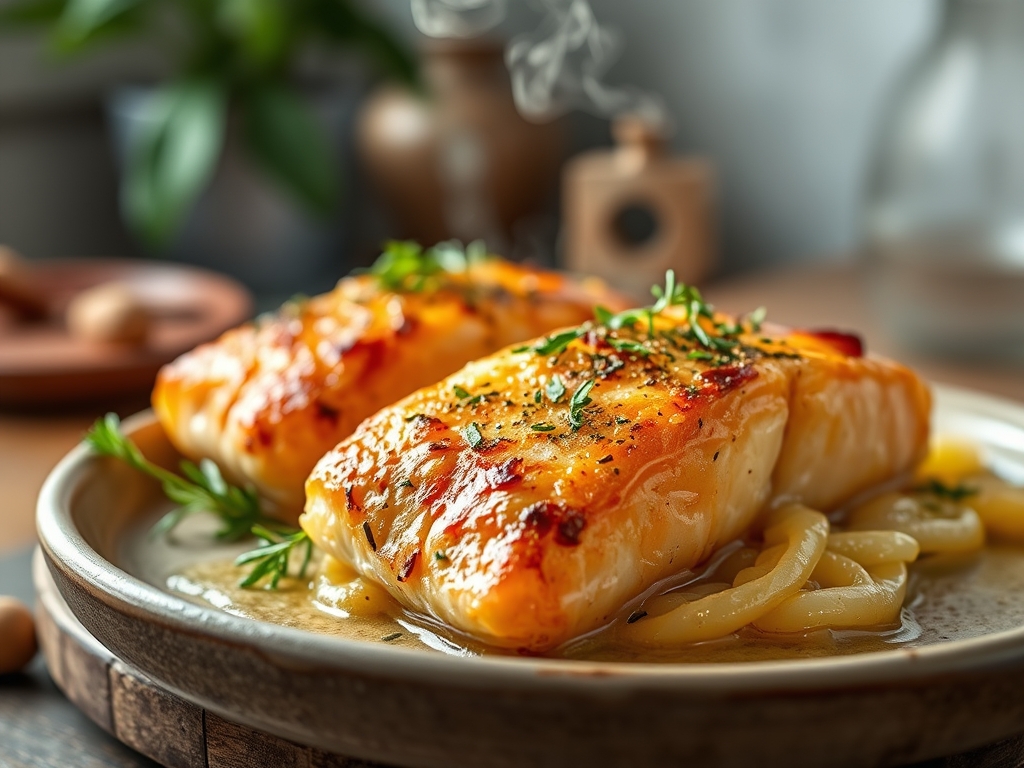
Imagine the scent of caramelized sugars mingling with the savory, fatty aroma of a perfectly seared fillet. It is a sensory collision where the tropics meet the deep Atlantic. When you dive into the world of salmon recipes baked pineapple, you are not just making dinner; you are orchestrating a complex chemical reaction. The acidity of the fruit acts as a natural tenderizer while the high sugar content provides the perfect substrate for the Maillard reaction. We are aiming for that glass-like glaze and a flake that yields to the slightest pressure of a fork. This is the ultimate weeknight flex. It is sophisticated enough for a dinner party but fast enough for a Tuesday night when your brain is fried from spreadsheets. We are going to master the balance of sweet, salt, and fat using a few professional tricks that will make your kitchen smell like a five-star resort. Grab your apron because we are about to turn a humble piece of fish into a culinary masterpiece.
The Gathers:
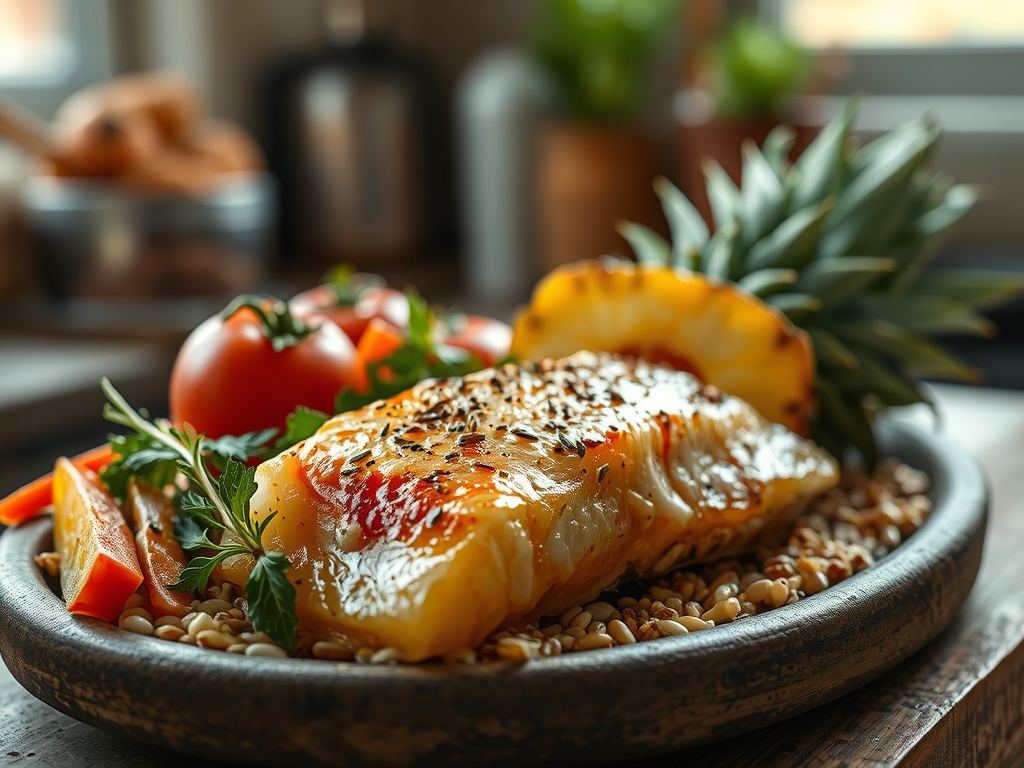
Setting up your mise-en-place is the difference between a frantic kitchen and a fluid one. For these salmon recipes baked pineapple, you need high-quality proteins and vibrant aromatics. Start with a center-cut Atlantic or King salmon side. Look for deep pigmentation and firm muscular structure; this indicates a high Omega-3 content which will render beautifully under heat. Your pineapple should be "gold" variety, ensuring a high Brix level (sugar content) for optimal caramelization.
You will need a microplane for zesting fresh lime and grating ginger into a fine paste. Have your digital scale ready to measure out 50 grams of dark brown sugar and 30 milliliters of tamari or soy sauce. The salt should be flaky Maldon for texture. For the "Smart Substitutions," if you find yourself without fresh pineapple, use canned rings but pat them bone-dry with a lint-free towel to ensure they roast rather than steam. If you are avoiding soy, coconut aminos offer a similar viscous quality with a lower sodium profile. Always keep a high-smoke-point oil, like avocado or grapeseed, in a saucier nearby for brushing the skin to ensure maximum crispness.
The Clock
Efficiency in the kitchen is all about "Chef's Flow." Total active preparation time is approximately 15 minutes, while the total bake time ranges from 12 to 18 minutes depending on the thickness of your fillets. The goal is to reach an internal temperature of 125 degrees Fahrenheit for a medium-rare finish.
The flow works like this: while the oven preheats to a roaring 400 degrees Fahrenheit, you are prepping your glaze and slicing the fruit. By the time the oven chime rings, your salmon should be seasoned and resting at room temperature. This "tempering" of the fish prevents the muscle fibers from seizing up when they hit the heat, ensuring a buttery texture.
The Masterclass
1. The Prep and Temper
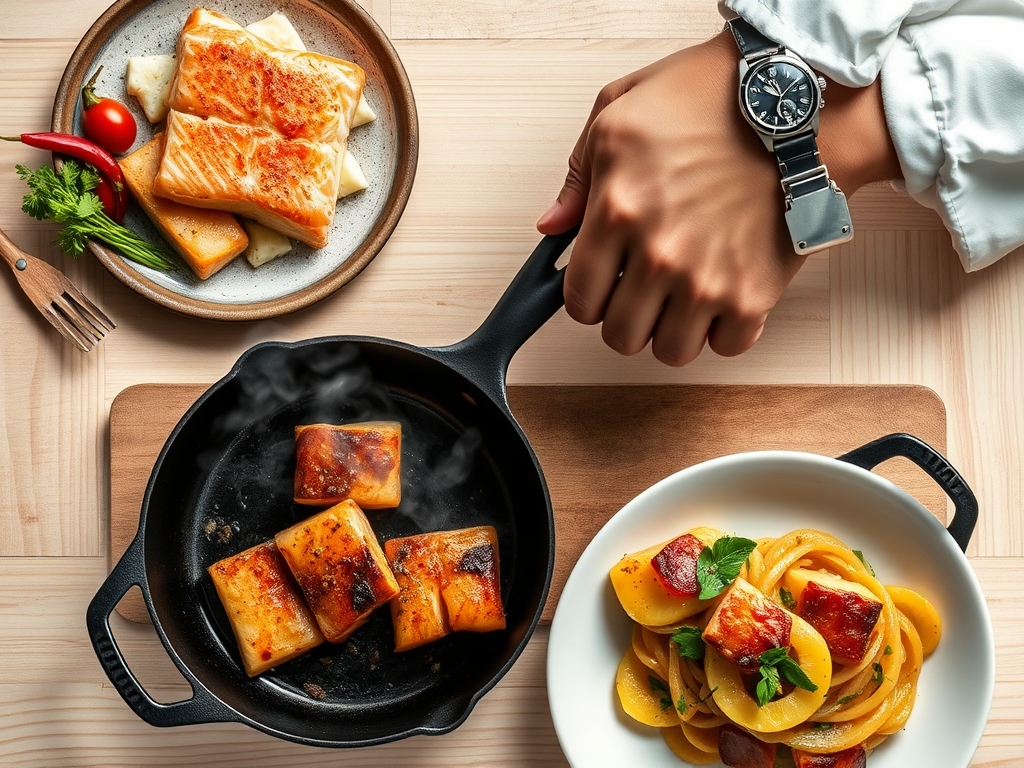
Lay your salmon on a parchment-lined sheet pan. Use a bench scraper to portion the fish into even six-ounce fillets if you did not buy them pre-cut. Pat the skin and flesh completely dry. Moisture is the enemy of the Maillard reaction.
Pro Tip: Drying the surface allows for enzymatic browning to occur immediately. If the fish is wet, the energy of the oven is wasted evaporating water instead of browning the proteins.
2. The Glaze Infusion
In a small bowl, whisk together your soy sauce, ginger, garlic, and honey. Use a silicone pastry brush to coat the top of each fillet. Do not over-saturate; a thin, even layer is best for building a crust.
Pro Tip: Honey contains fructose, which caramelizes at a lower temperature than table sugar. This ensures a deep mahogany color before the fish overcooks.
3. The Pineapple Foundation
Slide thin rounds of pineapple underneath the edges of the salmon. This creates a "flavor lift," allowing hot air to circulate under the fish while the juices from the fruit infuse the bottom of the fillet.
Pro Tip: This technique uses conduction to transfer heat from the fruit to the fish, gently steaming the bottom while the top roasts.
4. The High-Heat Roast
Place the pan on the center rack. Watch for the albumin (the white protein) to just barely start appearing on the sides. Use tongs to check the firmness of the pineapple; it should be softened and slightly charred at the edges.
Pro Tip: Account for thermal carryover. The internal temperature will rise about 5 degrees after you remove the pan from the oven. Pull the fish at 120 degrees for a perfect 125-degree finish.
5. The Final Sear (Optional)
If you have a kitchen torch or a high-powered broiler, give the tops of the pineapple a 30-second blast. This creates a piquant bitterness that cuts through the richness of the salmon fat.
Pro Tip: Flash-heating the surface creates a texture contrast known as "shatter-crisp," which provides a superior mouthfeel.
The Deep Dive
From a nutritional standpoint, this dish is a powerhouse. You are getting high-quality lean protein, essential fatty acids, and bromelain, an enzyme found in pineapple that aids digestion. One serving typically contains 350 calories, 34g of protein, and 12g of healthy fats.
For dietary swaps, Vegan diners can substitute the salmon with thick-cut "steaks" of cauliflower or extra-firm tofu that has been pressed for 30 minutes. For Keto enthusiasts, replace the honey and brown sugar with an erythritol-based sweetener to keep the glycemic index low. To keep it Gluten-Free, simply ensure your tamari is certified GF.
The "Fix-It" Guide:
- The Glaze is Runny: You likely did not reduce it enough or the fish was too wet. Fix it by popping the fillets under the broiler for 60 seconds to dehydrate the sauce into a sticky lacquer.
- The Pineapple is Tough: This happens with underripe fruit. Fix it by brushing the pineapple with a bit of maple syrup halfway through to accelerate softening.
- The Salmon is Dry: You missed the carryover window. Fix it by serving with a "broken" vinaigrette of lime juice and olive oil to add instant moisture back to the palate.
For meal prep, reheating salmon is a science. Never use a microwave; it turns the fats rancid and the texture rubbery. Instead, wrap the leftover salmon in foil with a teaspoon of water and heat in a toaster oven at 275 degrees. This creates a mini-steamer environment that restores "day-one" flake quality.
The Wrap-Up
There you have it; a tropical escape on a single sheet pan. Mastering salmon recipes baked pineapple is about understanding how acid, sugar, and heat interact to create something greater than the sum of its parts. You have used your microplane, your digital scale, and your culinary intuition to build a dish that is as balanced as it is beautiful. Go ahead and garnish with some fresh cilantro and a squeeze of charred lime. You have officially leveled up your weeknight routine.
The Kitchen Table
How do I stop salmon from sticking to the pan?
Always use parchment paper or a well-seasoned heavy-bottomed skillet. Ensure the fish is room temperature and the surface is dry. Apply a thin layer of high-smoke-point oil to the skin before it touches the heat source.
Can I use frozen pineapple for this recipe?
Yes, but thaw it completely and drain all excess liquid first. Frozen fruit has broken cell walls, meaning it will release more juice. Roast it slightly longer to ensure the sugars concentrate and do not result in a soggy fillet.
What is the best way to tell if salmon is done?
Use a digital thermometer to hit 125 degrees Fahrenheit. Alternatively, press the top of the fillet gently with a fork; if the muscle segments (flakes) separate easily along the white lines of fat, the fish is perfectly cooked.
Why is my pineapple not browning in the oven?
The oven temperature might be too low or the pineapple is too wet. Ensure your oven is at least 400 degrees. You can also lightly dust the pineapple with a pinch of sugar to kickstart the caramelization process.