
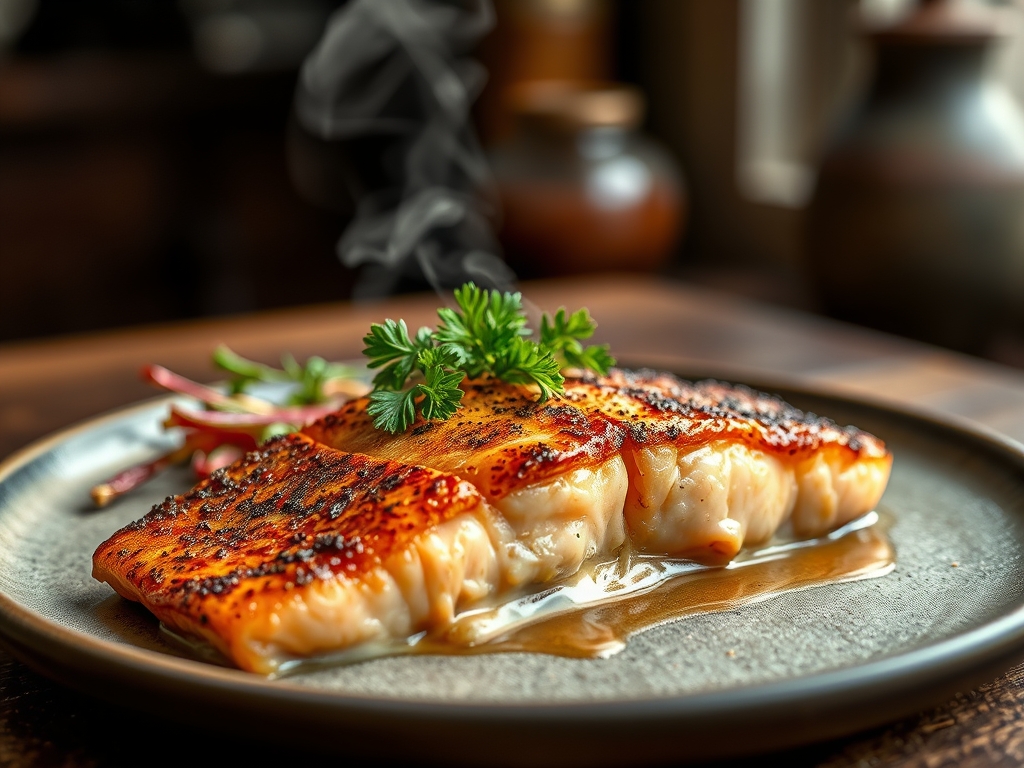
Imagine the sound of a heavy blade slicing through a chilled, fatty fillet. It is a clean, resonant thud against the wooden board. Now, imagine that same fillet emerging from a vortex of superheated air, its surface transformed into a glass-like sheet of crackling gold. When searching for the best air fried salmon recipes, most people settle for "good enough." We are not most people. We are chasing the perfect marriage of a succulent, translucent center and a skin so crisp it shatters like parchment.
The secret to this textural duality is not luck; it is thermodynamics. Most home cooks struggle with the "gray band" of overcooked protein or a skin that feels more like wet leather than a gourmet crisp. By mastering the convective power of your air fryer, you turn a simple weeknight dinner into a high-performance culinary event. We are going to deconstruct the moisture-removal process and the Maillard reaction to ensure every bite is a piquant explosion of flavor. Grab your digital scale and your favorite apron. We are about to turn your kitchen into a high-tech bistro.
The Gathers:
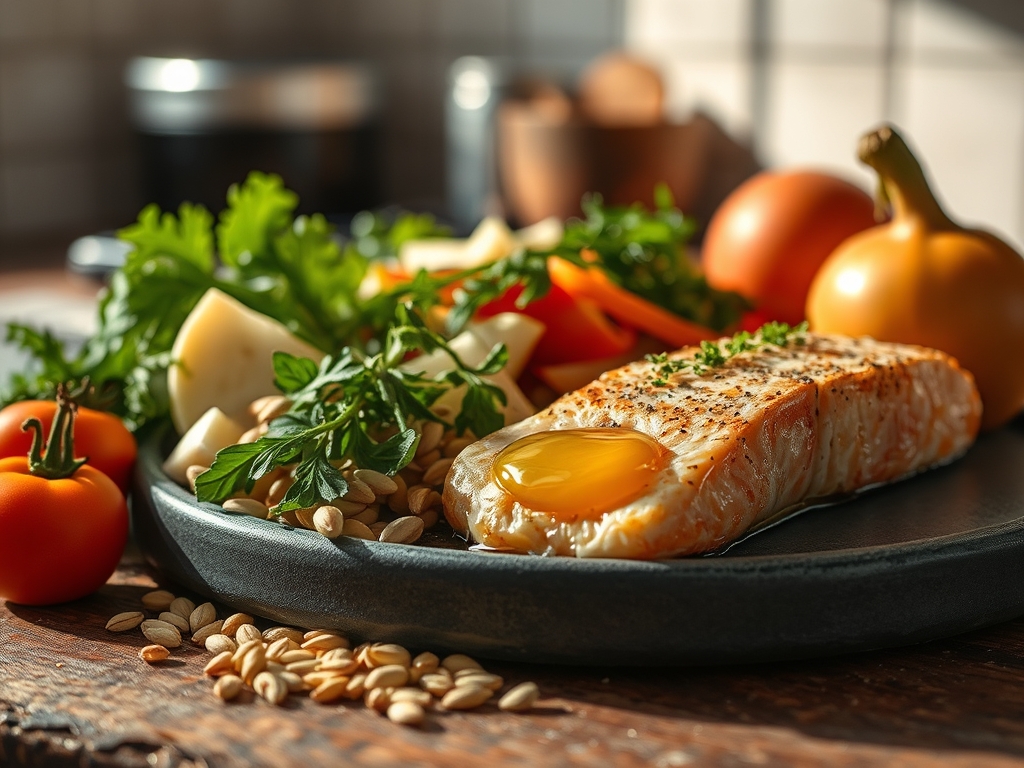
Before we engage the heating element, we must curate our mise-en-place. Quality salmon is non-negotiable. Look for fillets with high intramuscular fat; this is often seen as thin, white marbling. This fat will render during the cooking process, essentially "frying" the fish from the inside out and keeping the flesh moist. You will need a high-smoke-point oil like avocado or grapeseed oil. Avoid extra virgin olive oil for this specific application, as its low smoke point can create acrid flavors in the high-velocity air of the fryer.
Your toolkit is just as vital as your ingredients. You will need a microplane for zest, a set of precision tongs for delicate handling, and a digital instant-read thermometer. For the seasoning, we are looking for a balance of salinity and aromatics. Kosher salt is preferred over table salt because its larger crystals allow for more even distribution and better moisture extraction from the skin.
Smart Substitutions:
If you are avoiding soy, substitute coconut aminos for a similar umami profile. If you lack a fresh lemon, a pinch of citric acid or a splash of white balsamic vinegar can provide that necessary acidic brightness to cut through the richness of the fish. For those who want a spicy kick, a smear of gochujang or a dusting of smoked paprika will infuse the crust with a deep, smoky complexity.
The Clock
Efficiency in the kitchen is about "Chef's Flow." This is the art of overlapping tasks so that no second is wasted. The total active prep time for this recipe is approximately 8 minutes, with a cook time of 10 to 12 minutes depending on the thickness of your fillets.
Start by preheating your air fryer. This is a critical step that many skip. By preheating for 5 minutes, you ensure that the moment the fish touches the basket, the thermal transfer begins immediately. While the machine warms, use this time to pat the fish dry and apply your seasonings. By the time the timer dings, your salmon should be at room temperature, which prevents the "shock" of cold protein hitting a hot surface, ensuring a more even cook from edge to center.
The Masterclass
1. The Desiccation Ritual
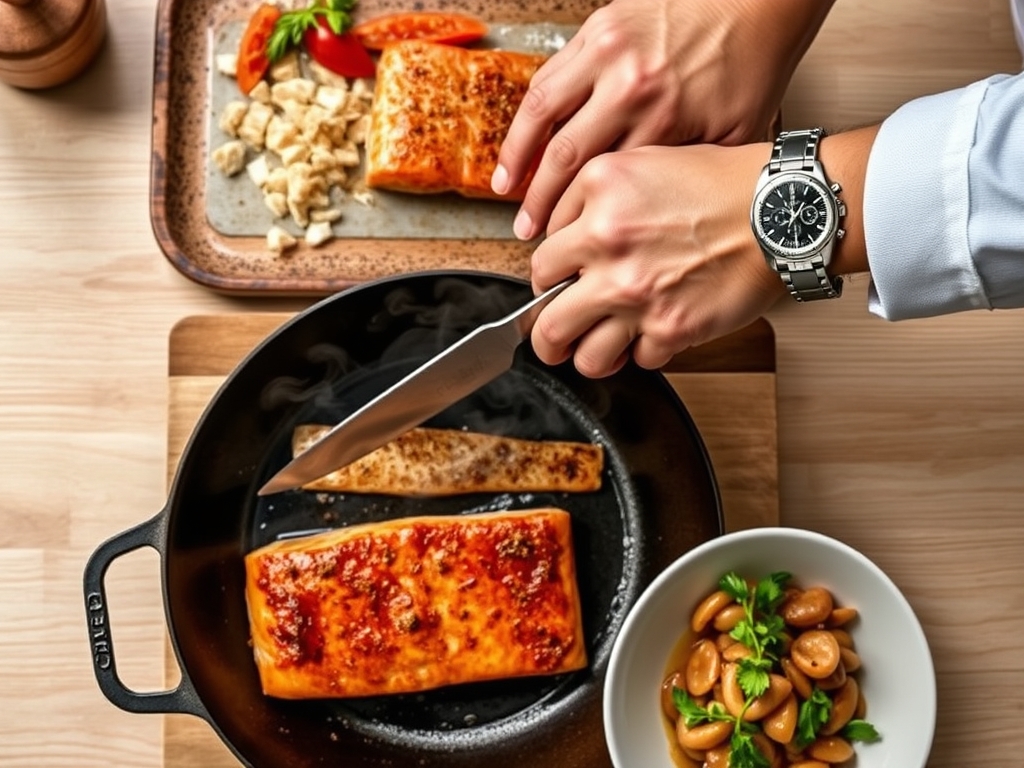
Use a paper towel to press firmly onto the skin side of the salmon. You want to remove every molecule of surface moisture. If the skin is damp, the air fryer will spend the first five minutes steaming the fish rather than crisping it.
Pro Tip: This is known as surface evaporation. By removing moisture, you allow the temperature of the skin to rise rapidly above 212 degrees Fahrenheit, which is the prerequisite for the Maillard reaction to occur.
2. The Oil Barrier
Lightly coat the skin with your high-smoke-point oil. Do not drench it; a thin, viscous layer is all you need to conduct heat efficiently across the entire surface. Season generously with kosher salt.
Pro Tip: Salt acts as a denaturant. It breaks down the tightly wound proteins on the surface, allowing them to form a tighter, crispier mesh as they dehydrate and brown.
3. The High-Heat Launch
Place the fillets skin-side up in the preheated basket. Set the temperature to 400 degrees Fahrenheit. The high-velocity fan will circulate heat around the fillet, creating a "convection envelope" that mimics deep-frying without the excess grease.
Pro Tip: This stage utilizes forced convection. The moving air strips away the "cold boundary layer" of air surrounding the food, cooking it significantly faster than a traditional oven.
4. The Glaze Application
If you are using a honey or maple-based glaze, wait until the last 3 minutes of cooking to apply it using a silicone brush. If you apply sugar-heavy glazes too early, they will carbonize and turn bitter.
Pro Tip: This prevents pyrolysis, the chemical decomposition of organic matter by heat. You want the sugars to caramelize into a tacky, golden coating, not burn into black soot.
5. The Internal Check
Use your digital thermometer to pull the salmon when it hits 125 degrees Fahrenheit for medium-rare or 130 degrees Fahrenheit for medium. The temperature will continue to rise once it is out of the fryer.
Pro Tip: This is called thermal carryover. The residual heat on the surface of the fish will continue to migrate toward the center, raising the internal temperature by 5 to 7 degrees during the rest.
6. The Rest
Transfer the salmon to a warm plate and let it sit for at least 3 minutes before serving. This allows the muscle fibers to relax and reabsorb the juices.
Pro Tip: Resting allows for moisture redistribution. If you cut into it immediately, the high internal pressure will force the juices out, leaving you with a dry, disappointing fillet.
The Deep Dive
From a nutritional standpoint, salmon is a powerhouse. A standard 6-ounce fillet provides roughly 34 grams of high-quality protein and is rich in Omega-3 fatty acids, which are essential for brain health. If you are following a Keto diet, this recipe is a gold mine of healthy fats. For a Vegan alternative, you can apply these same air-frying techniques to extra-firm tofu or "watermelon tuna," though the cook times will vary.
The Fix-It: Common Pitfalls
- White Stuff Oozing Out: This is albumin, a protein that pushes out when salmon is cooked too fast or too high. Fix: Brine the fish in a salt-water solution for 10 minutes before cooking to minimize albumin release.
- Sticking to the Basket: Even "non-stick" baskets can grip fish skin. Fix: Place a small square of perforated parchment paper under the fillet, ensuring it does not block all the airflow.
- Uneven Cooking: This happens when fillets are of varying thicknesses. Fix: Fold the thin "tail" section under itself to create a uniform thickness across the entire piece.
Meal Prep & Reheating:
To maintain "day-one" quality, never reheat salmon in the microwave; it will turn rubbery. Instead, pop it back into the air fryer at 300 degrees Fahrenheit for 3 to 4 minutes. This gently warms the center while re-crisping the skin, maintaining the structural integrity of the fats.
The Wrap-Up
Mastering the best air fried salmon recipes is about more than just following a timer; it is about understanding the physics of your kitchen. When you treat your ingredients with technical respect; drying the skin, monitoring the internal temperature, and allowing for a proper rest; you elevate a simple protein into a masterpiece. The air fryer is your most powerful ally in achieving that elusive, restaurant-quality crunch. Now, go forth and shatter some skin!
The Kitchen Table
How do I stop my salmon from smelling "fishy"?
Freshness is key, but you can also rinse the fillet in cold water and pat it dry. Soaking the salmon in milk for 20 minutes before cooking can also bind to the trimethylamine oxide, neutralizing the scent.
Can I cook frozen salmon in the air fryer?
Yes, but for the best texture, thaw it first. If cooking from frozen, add 5 to 7 minutes to the cook time and skip the initial sear. Note that the skin will likely not reach maximum crispness.
What is the best way to clean the air fryer after fish?
Degrease the basket immediately with hot water and a citrus-based dish soap. For stubborn odors, place a slice of lemon inside the basket and run the fryer at 400 degrees for 2 minutes to aerate the chamber.
Why is my salmon skin still rubbery?
You likely had too much surface moisture or crowded the basket. Ensure the fillets have at least two inches of space between them to allow for proper airflow and moisture evaporation.
Should I leave the skin on?
Absolutely. The skin acts as a protective thermal barrier for the delicate flesh. Even if you do not intend to eat it, cooking with the skin on results in a much juicier and more flavorful fillet.