
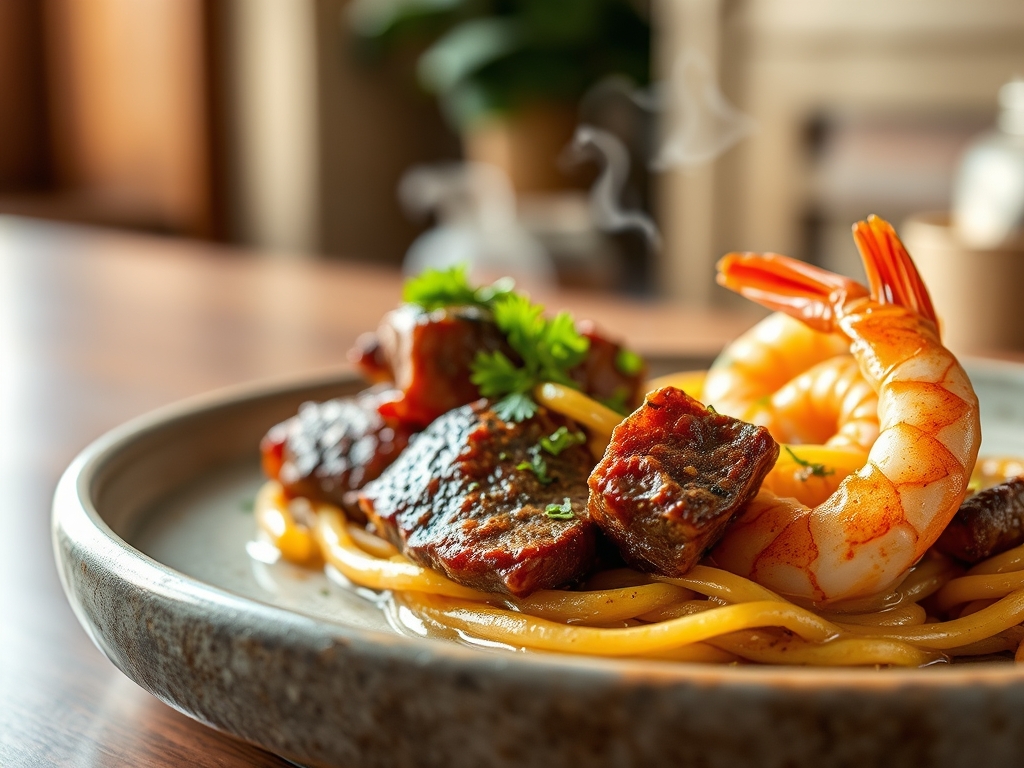
Imagine the scent of cold butter hitting a scorching cast iron surface; it is the olfactory equivalent of a standing ovation. When you combine the deep, iron rich musk of a seared ribeye with the sweet, saline snap of jumbo prawns, you are not just cooking dinner. You are orchestrating a high stakes chemical performance. Finding the perfect balance in shrimp and beef recipes requires more than just heat. It demands an understanding of how land and sea proteins interact on the palate. One provides the heavy, umami bass note while the other offers a bright, oceanic treble.
Most people approach surf and turf as two separate meals forced onto a single plate. We are going to change that. We are looking for synergy, where the rendered beef fat becomes the poaching liquid for your shellfish. This is the ultimate culinary power couple. Whether you are planning a candlelit anniversary or a high protein post workout feast, mastering these textures will elevate your kitchen status from home cook to executive chef. Let us dive into the molecular magic of these shrimp and beef recipes.
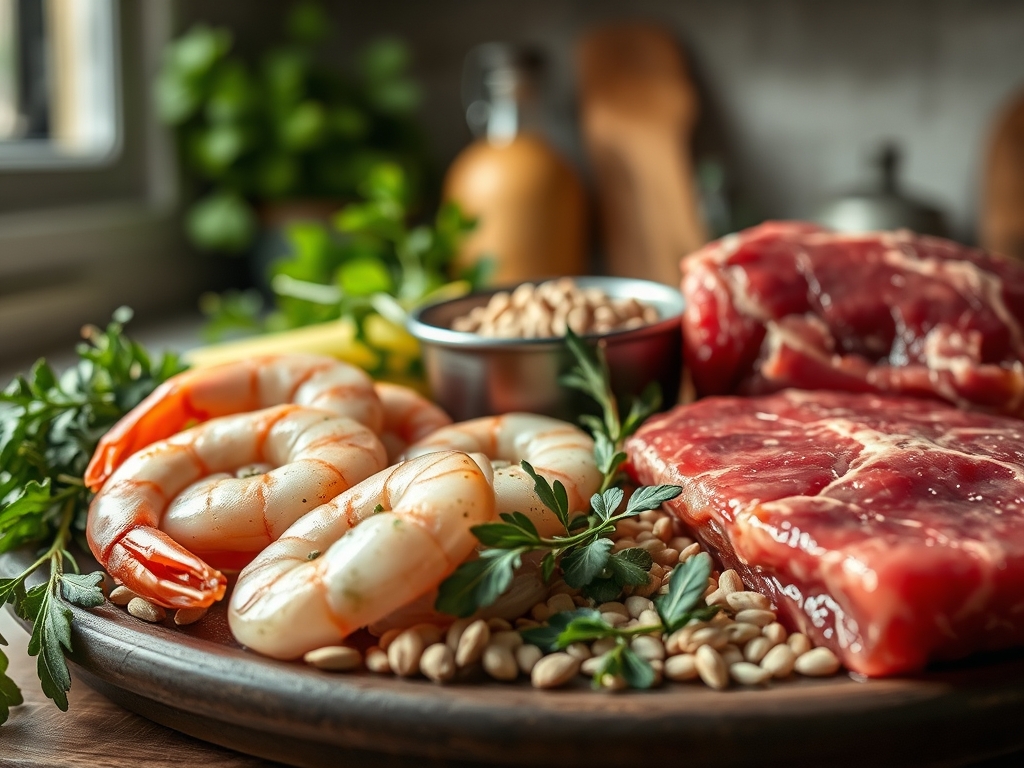
The Gathers:
To achieve professional results, your mise-en-place must be clinical. Start with your protein. For the beef, look for heavy intramuscular marbling; this is the white lace of intramuscular fat that will render into liquid gold. For the shrimp, 16/20 count (meaning sixteen to twenty per pound) provides enough surface area for a proper crust without overcooking the interior.
You will need a heavy-bottomed skillet, preferably seasoned cast iron or tri-ply stainless steel, to maintain thermal mass. Grab your microplane for zest and garlic; a digital scale for precise seasoning; and a saucier if you plan on whisking up a silk-smooth emulsion.
Smart Substitutions:
If prime ribeye is out of reach, a flank steak works beautifully if sliced against the grain to shorten the muscle fibers. For the shrimp, if fresh is unavailable, "flash-frozen at sea" is actually superior to the "fresh" display case, as it halts enzymatic breakdown immediately. Swap butter for ghee if you need a higher smoke point, or use coconut aminos instead of soy for a gluten-free umami punch.
The Clock
Efficiency in the kitchen is about managing the "Chef's Flow." This refers to the overlap of passive and active tasks. Total prep time for these shrimp and beef recipes sits at 20 minutes, with a cook time of approximately 15 minutes.
The secret is the rest period. Beef requires a mandatory 10 minute rest to allow the muscle fibers to relax and reabsorb juices. During this "dead time," you will flash-sear your shrimp. By the time the shrimp are pink and curled, the beef is perfectly tempered and ready for the knife. This ensures both proteins hit the table at their peak internal temperature.
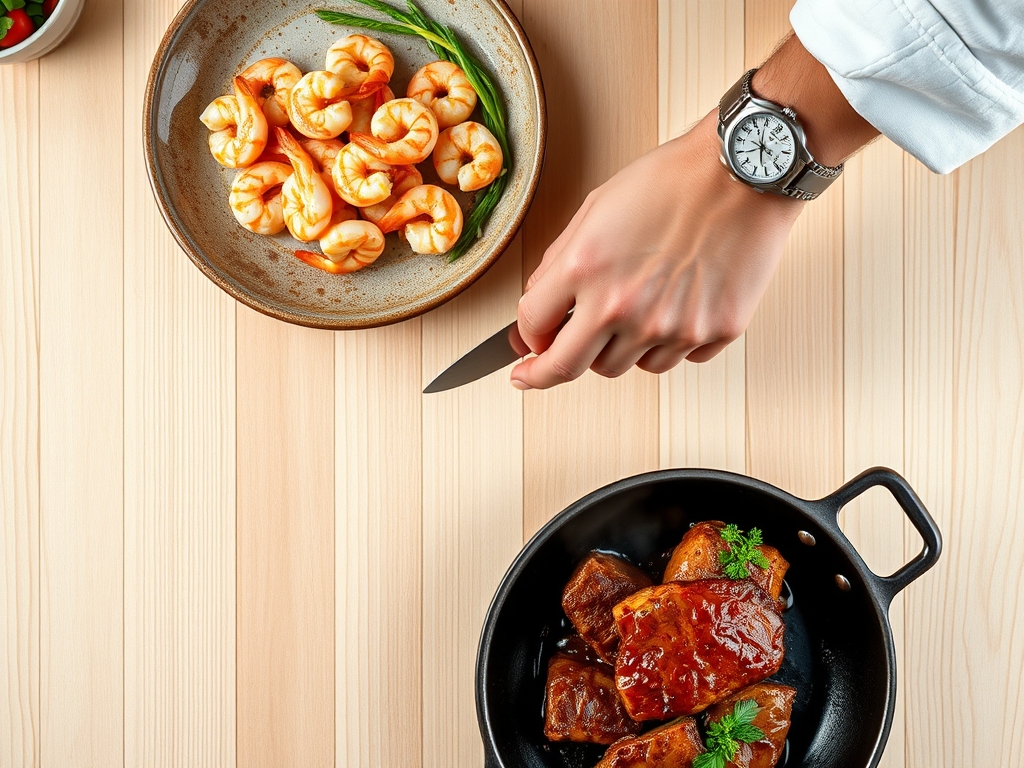
The Masterclass
1. Tempering and Surface Preparation
Remove your beef from the refrigerator at least 45 minutes before cooking. Use a paper towel to pat the surface bone-dry. Moisture is the enemy of the Maillard reaction; if the surface is wet, the meat will steam rather than sear.
Pro Tip: This is called evaporative cooling. If you do not dry the meat, the energy from the pan is wasted turning surface water into steam at 212 degrees Fahrenheit instead of browning the protein at 300 degrees Fahrenheit.
2. The Initial Sear
Heat your skillet until the oil just begins to shimmer and reach its smoke point. Lay the beef away from you to avoid oil splatter. Use tongs to press the meat down, ensuring total contact with the metal.
Pro Tip: Avoid moving the meat for the first three minutes. This allows for enzymatic browning, creating a complex crust of rearranged amino acids and sugars that provides that signature "steakhouse" flavor.
3. The Butter Baste (Arrosage)
Once you flip the beef, drop in cold butter, smashed garlic, and thyme. Tilt the pan and use a large spoon to continuously douse the meat with the foaming fat.
Pro Tip: This technique, known as arrosage, uses the butter as a heat transfer medium. The milk solids in the butter toast, adding a nutty profile while the fat insulates the meat for a more even internal cook.
4. Precision Shrimp Searing
Remove the beef to a warm plate. In the same pan, which is now filled with infused beef fat and browned butter, toss in your seasoned shrimp. They only need 90 seconds per side.
Pro Tip: Watch for the shrimp to transition from translucent to opaque. Overcooking causes the proteins to tighten into a "rubber band" texture due to protein denaturation. Pull them when they form a "C" shape; a "O" shape means they are overdone.
5. Deglazing the Fond
Once the shrimp are out, use a splash of white wine or beef stock to scrape up the brown bits (the fond) stuck to the bottom of the pan. Use a bench scraper or wooden spoon to incorporate these concentrated flavor nuggets into a pan sauce.
Pro Tip: This process uses solubility to capture the caramelized proteins. Adding a cold knob of butter at the very end (monter au beurre) creates a viscous emulsion that coats the back of a spoon.
The Deep Dive
Macro Nutrition:
A standard serving of these shrimp and beef recipes provides approximately 45g of protein, 22g of fat (depending on the cut), and near-zero carbohydrates. It is a metabolic powerhouse rich in Vitamin B12, Zinc, and Selenium.
Dietary Swaps:
For a Keto version, serve over cauliflower mash with extra compound butter. For a Vegan alternative (if you are just here for the technique), use king oyster mushroom "scallops" and thick-cut cauliflower steaks, utilizing the same searing principles.
The Fix-It:
- Tough Steak: You likely cut with the grain. Always slice perpendicular to the muscle fibers to ensure a tender bite.
- Rubbery Shrimp: They sat in the pan too long. Carryover cooking continues even after you pull them off the heat; remove them when they are 90% done.
- Broken Sauce: If your pan sauce separates, it is too hot. Remove from heat and whisk in a teaspoon of cold water or cream to re-emulsify the fats.
Meal Prep & Reheating:
To maintain "day-one" quality, never microwave. Use a low-temperature oven (275 degrees Fahrenheit) with a splash of broth covered in foil. This gentle thermal conduction prevents the shrimp from turning into erasers while warming the beef to a perfect medium.
The Wrap-Up
Mastering shrimp and beef recipes is the ultimate "flex" in the home kitchen. It shows you understand timing, temperature, and the delicate balance of flavors. By utilizing the rendered fats from the beef to flavor the shrimp, you create a cohesive dish that feels intentional rather than accidental. Now, grab your heavy skillet, trust the sizzle, and go create something magnificent. Your kitchen table is waiting.
The Kitchen Table
What is the best cut of beef for surf and turf?
Filet mignon is traditional for tenderness, but ribeye offers superior flavor due to fat content. If you want a balance of both, a New York Strip provides a robust "beefy" flavor with a manageable texture for searing.
Should I leave the tails on the shrimp?
Tails-on is preferred for culinary styling and flavor. The shells contain chitin and glutamate, which deepen the sauce's complexity during the sear. However, for ease of eating in a pasta-based dish, removing them is more practical.
Can I use frozen shrimp for these recipes?
Yes, but thaw them completely in a bowl of cold water first. Ensure they are thoroughly dried with paper towels. Excess moisture on frozen shrimp will prevent the Maillard reaction, resulting in a rubbery, boiled texture.
How do I know when the steak is perfectly medium-rare?
Use a digital meat thermometer. Pull the beef off the heat when it hits 130 degrees Fahrenheit. During the resting phase, thermal carryover will raise the internal temperature to a perfect 135 degrees Fahrenheit for a rosy center.