
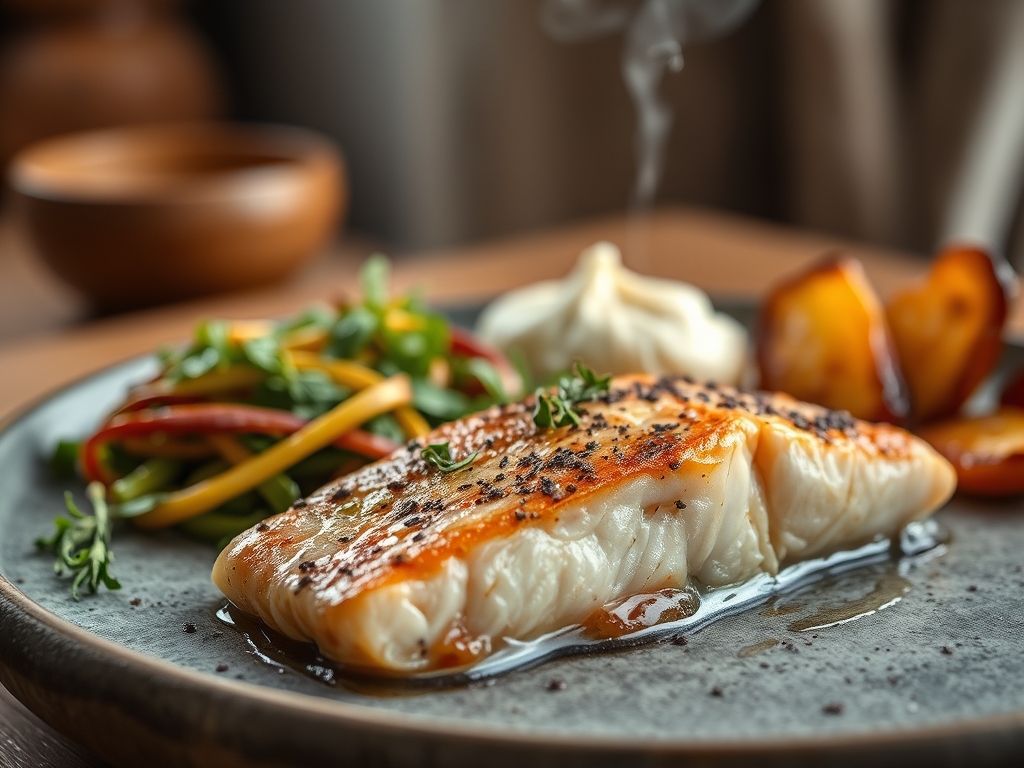
Imagine the sound of a cold, heavy-bottomed skillet meeting a high-flame burner; that sharp, metallic ring is the opening bell for a culinary masterpiece. You are standing in your kitchen, a beautiful fillet of wild-caught sockeye resting on the cutting board, its deep coral hue a testament to the astaxanthin antioxidants within. We are about to dive into the world of healthy salmon recipes with sides that actually satisfy your soul. This is not about bland, steamed fish and sad broccoli. We are talking about the Maillard reaction, the science of crispy skin, and side dishes that provide a piquant contrast to the rich, omega-3 fats of the fish. By the time we are done, you will have mastered nine distinct pairings that turn a Tuesday night dinner into a high-performance ritual. We are aiming for that perfect intersection of cellular nutrition and gourmet texture; think of it as biohacking your palate with every flaky, buttery bite.
The Gathers:
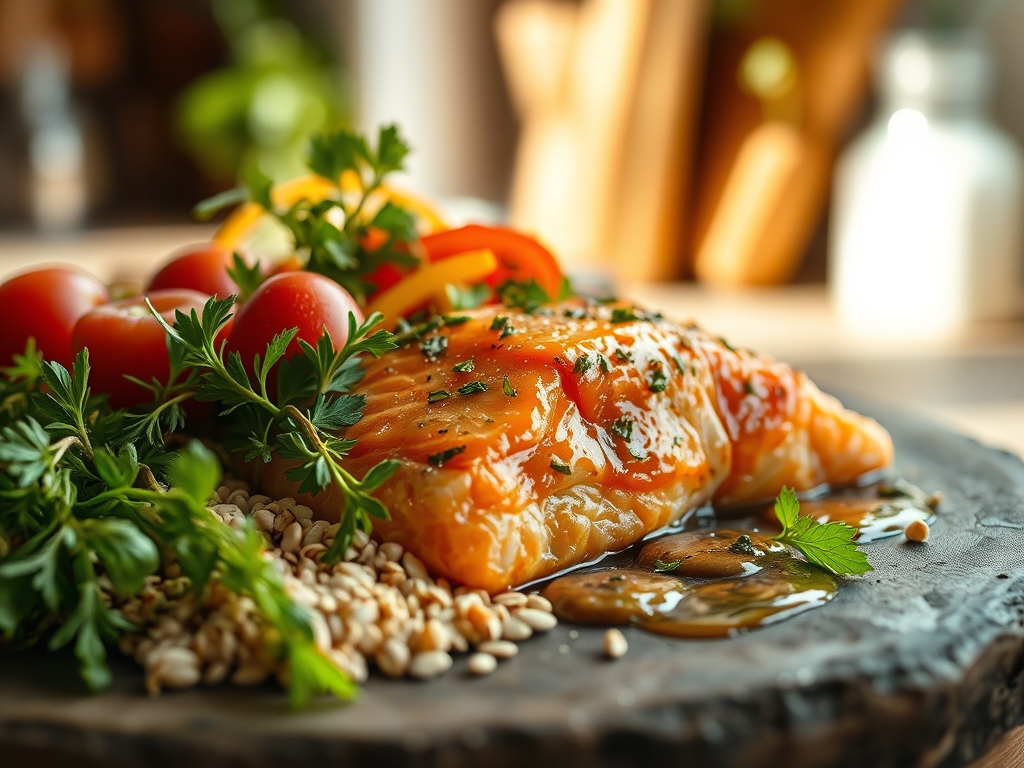
To execute these healthy salmon recipes with sides, your mise-en-place must be precise. Start with the protein: look for fillets that are firm to the touch, indicating the muscle fibers have not begun to undergo proteolysis. You will need a high-smoke-point fat like avocado oil or clarified butter to ensure you can reach the 400 degree Fahrenheit threshold without the oil breaking down into acrolein.
Your secondary ingredients should focus on aromatic complexity. Gather fresh dill, Meyer lemons for their lower acidity and floral notes, and a bulb of garlic to be crushed for its allicin release. For the sides, we are looking at fibrous cruciferous vegetables like shaved Brussels sprouts, complex carbohydrates like black forbidden rice, and acidic brighteners like pickled red onions.
Smart Substitutions: If you are avoiding dairy, swap butter for a viscous, high-quality extra virgin olive oil infused with lemon zest. For a low-carb profile, replace the grain-based sides with a cauliflower puree aerated in a high-speed blender to mimic the velvet mouthfeel of traditional mashed potatoes. If sockeye is unavailable, King salmon offers a higher fat content that is more forgiving during the rendering process.
The Clock
Efficiency in the kitchen is about managing the "Chef's Flow," which is the sequence of tasks that minimizes downtime. Total prep time for these pairings is roughly 15 minutes, with an active cook time of 12 to 18 minutes depending on the thickness of your fillets.
The secret is to start your sides first. Grains or roasted tubers have a higher thermal mass and retain heat longer than the delicate protein. While your quinoa simmers or your asparagus roasts, you can focus entirely on the salmon. This prevents the "cold side, hot fish" tragedy. By the time the salmon hits its 5-minute rest period, your sides are ready to plate.
The Masterclass
1. The Moisture Barrier
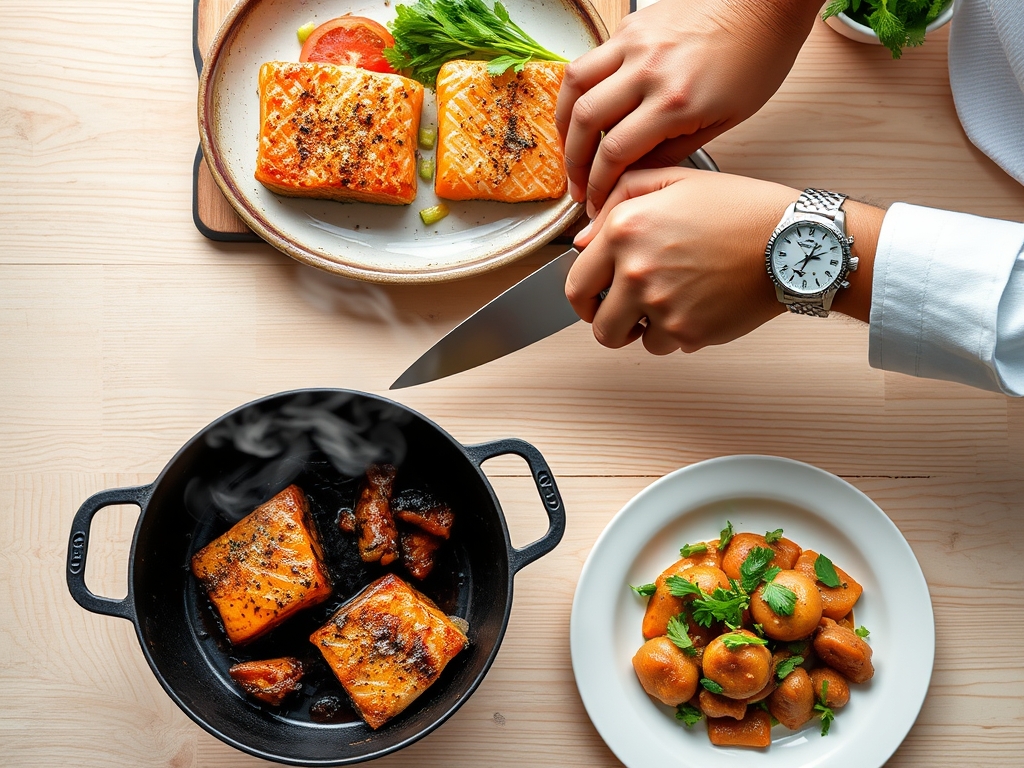
Pat the salmon skin bone-dry with a paper towel. Moisture is the enemy of the Maillard reaction; any surface water will turn to steam, preventing the skin from becoming crisp. Use a sharp chef's knife to score the skin slightly, which prevents the fillet from curling as the proteins contract.
Pro Tip: This is about thermal evaporation. By removing surface moisture, the energy from the pan goes directly into browning the skin rather than boiling away water.
2. The Sear and Render
Place the salmon skin-side down in a preheated heavy-bottomed skillet. Use your fish spatula to apply light pressure for the first 30 seconds. This ensures maximum surface contact. You will see the color change creep up the side of the fillet as the heat conducts through the flesh.
Pro Tip: Conduction is more efficient than convection. Pressing the fish ensures the heat transfers evenly, preventing uneven "hot spots" that lead to localized overcooking.
3. The Deglaze and Infuse
Once the skin is crispy, flip the fish and add a knob of butter or a splash of broth to the pan. Use a spoon to baste the salmon with the hot liquid. This is the time to add your aromatics like thyme or smashed garlic.
Pro Tip: Basting creates a micro-environment of heat that finishes the top of the fish gently while the butter solids undergo enzymatic browning, adding a nutty aroma.
4. The Carryover Rest
Remove the salmon from the pan when it reaches an internal temperature of 125 degrees Fahrenheit. Transfer it to a warm plate and let it rest for five minutes.
Pro Tip: Thermal carryover will raise the internal temperature by another 5 to 10 degrees. If you wait until it hits 145 in the pan, it will be dry and chalky by the time you eat it.
The Deep Dive
When we look at the macro nutrition of these healthy salmon recipes with sides, we are hitting a golden ratio. A standard 6-ounce fillet provides roughly 34 grams of high-bioavailability protein and 13 grams of healthy fats. When paired with a side of sautéed kale and quinoa, you are adding complex fiber and a spectrum of magnesium and potassium.
Dietary Swaps:
- Vegan: While the salmon is the star, you can replicate the "side dish" experience using thick-cut cauliflower steaks seared with the same techniques.
- Keto: Eliminate the grains and opt for a side of asparagus drizzled with a lemon-tarragon hollandaise for increased fat macros.
- GF: Naturally, salmon is gluten-free, but ensure your soy-based glazes are swapped for tamari or coconut aminos.
The Fix-It:
- Skin Sticking: Your pan wasn't hot enough or you tried to flip it too early. The fish will naturally "release" once the proteins have denatured and browned.
- White Gunk (Albumin): This is protein pushing to the surface because the heat was too high. Lower your flame to cook the fish more gently.
- Soggy Sides: You overcrowded the pan. Roast vegetables in a single layer to allow air circulation, preventing them from steaming in their own juices.
Meal Prep Science: To reheat salmon without it smelling "fishy" or turning into rubber, use the "low and slow" method. Place it in a 275-degree oven with a splash of water and cover with foil. This re-hydrates the muscle fibers without denaturing them further.
The Wrap-Up
Mastering healthy salmon recipes with sides is the ultimate culinary power move. It combines the technical precision of heat management with the artistic flair of balancing flavors. You now have the tools to create a plate that is vibrant, nutritionally dense, and restaurant-quality. Remember: dry the skin, respect the rest period, and always brighten your sides with a hit of acid. Your kitchen is now a laboratory of flavor; go forth and sear with confidence!
The Kitchen Table
How do I get the skin extra crispy?
Ensure the skin is bone-dry before hitting the pan. Use a high-smoke-point oil and a heavy-bottomed skillet. Don't move the fish for the first two minutes; the Maillard reaction needs undisturbed contact with the heat to create that golden crust.
What are the best vegetables for salmon?
Asparagus, broccolini, and shaved Brussels sprouts are elite choices. Their slight bitterness cuts through the fatty richness of the salmon. For a sweeter contrast, try roasted carrots or a fennel bulb sautéed with lemon zest and flaky sea salt.
Can I cook salmon from frozen?
It is possible but not recommended for the best texture. If you must, use the "en papillote" (parchment paper) method. This steams the fish evenly. However, for a proper sear, you must thaw the salmon completely and pat it dry.
How do I know when salmon is done?
Use a digital thermometer to look for 130 degrees Fahrenheit for medium. Alternatively, press the top of the fillet gently with a fork; if the layers of flesh begin to flake or "separate" easily along the white fat lines, it is ready.
Why does my salmon have white stuff on it?
That white substance is albumin, a liquid protein that firms up when heated. While safe to eat, it usually indicates the fish was cooked too fast at a high temperature. Cooking the salmon more gently helps keep the albumin inside the muscle.